
A 12-week recovery program
From burned out
to fully alive.
Built for high-achieving professionals who are done running on empty. Neuroscience, sleep, nutrition, movement and habit science, in one sequence, in the order your body can actually use them.
12 weeks4 phases5 systemsEvery protocol cited
You already know something is wrong.
You're tired in a way sleep doesn't fix. You're snapping at people you love and hating yourself for it five minutes later. You're getting through the day on caffeine and willpower, and some nights you lie there wide awake even though you're exhausted. Somewhere along the way, you stopped recognizing yourself.
Burnout isn't weakness. It's what happens when people who care a great deal give a great deal, for a long time, without a real way to put it down.
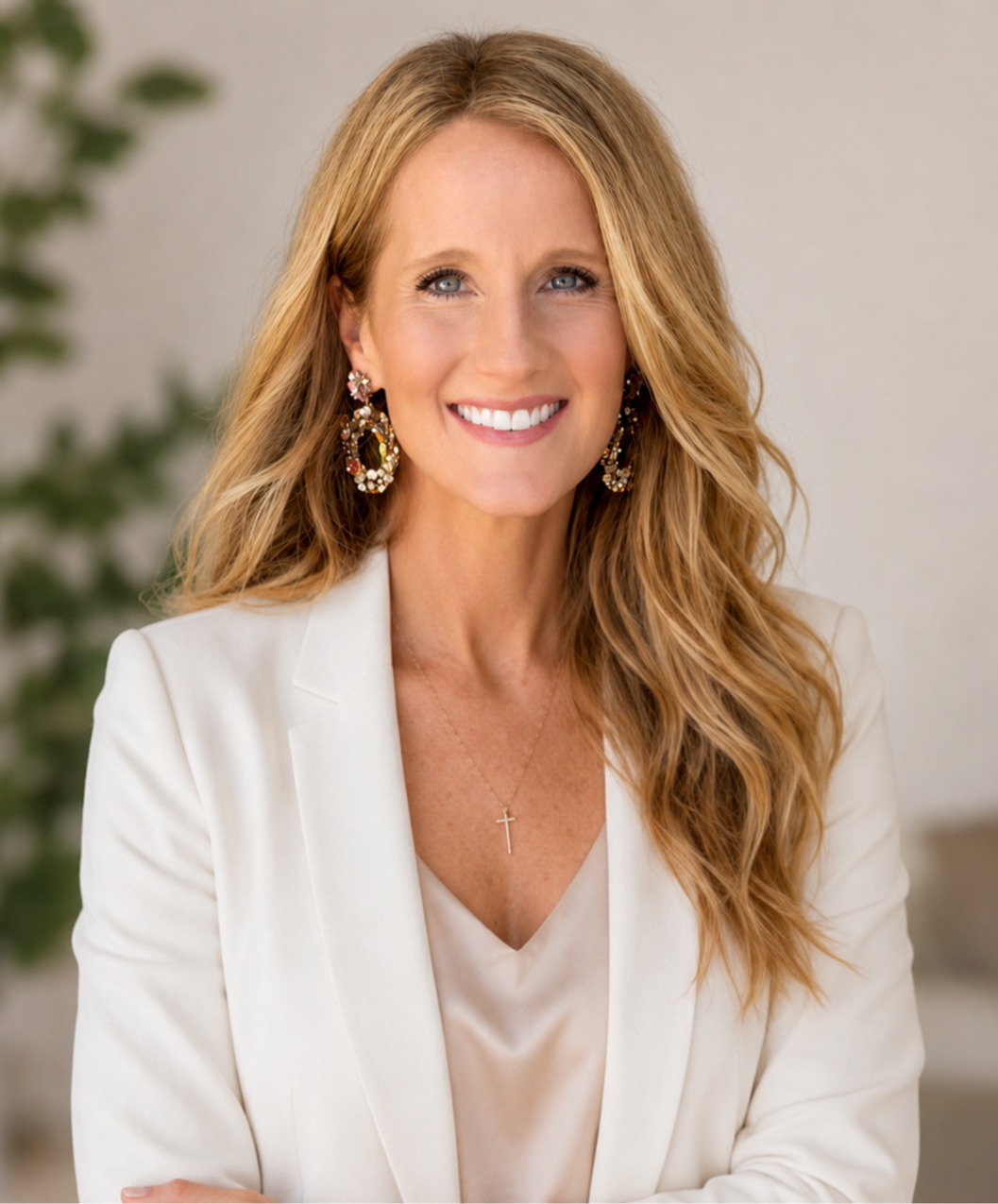
A message from Dr. Samantha
Dr. Samantha
“I know exactly how this feels. I've lived it.”
I've worked with thousands of people who were high-achieving, successful, disciplined, and completely running on empty. Burnout doesn't happen to people who don't care. It happens to people who've been carrying too much, for too long.
You've probably already tried to fix it. More sleep. A supplement. A vacation that helped for four days and evaporated the moment you got home. It hasn't stuck, not because you didn't try hard enough, but because none of it ever touched the actual problem.
If you're still living exactly like this one year from now, what does that cost you? Your body. The people who love you, quietly getting the tired, short-tempered version of you instead of who you really are. The patience, the energy, the sense of humor you've already lost touch with.
Burnout doesn't stay still. Left alone it doesn't level off, it gets a little worse, quietly, year after year, until tired becomes your baseline and you forget it was ever supposed to feel different.
I know because I've lived this too. Not just treated it in thousands of patients over a decade of building my own wellness practice. Lived it, worked through it, and come out the other side. That's not a credential. It's why this is my life's work.
Why this is different
Burnout isn't a sleep problem.
It's a whole-system problem.
Most programs treat one piece: a sleep app, a meditation habit, a supplement stack, a therapist who helps with the stress but never touches your nervous system, your nutrition, or the habits driving the cycle. That's changing the oil on a car with a cracked block.
RESTORED works on all five systems at once, in the order your biology can support.
Nervous system
Vagal tone, autonomic state, and getting out of survival mode.
Sleep
Circadian repair and the architecture that makes recovery possible.
Nutrition
Gut-brain axis, inflammation, and the fuel your adrenals need.
Movement
Cortisol-conscious training, not more intensity on an empty tank.
Habits
Systems that hold when motivation doesn't, built on your own energy curve.
The 12-week arc
Recognize. Restore. Rebuild. Rise.
Twelve weeks, four phases. Every week uses what the week before it built, because your body doesn't recover in pieces.
Week 01
The Burnout Biology
HPA axis dysregulation, cortisol mapping, and a real baseline assessment.
Week 02
Nervous System Reset
Polyvagal theory, vagal toning, and tools that shift your autonomic state.
Week 03
Identity Audit
Who you were versus who you are. Role shedding and values excavation.
Week 04
Sleep Architecture
Sleep stages, circadian rhythm repair, and a protocol you'll actually keep.
Week 05
Nutrition & the Brain
Gut-brain axis, anti-inflammatory eating, adrenal nutrition.
Week 06
Movement Medicine
Restorative exercise, BDNF, and cortisol-conscious training.
Week 07
Neuroplasticity Lab
Rewiring stress loops, BDNF activation, brain-state training.
Week 08
Habit Architecture
Identity-based habits installed on your own cortisol curve.
Week 09
Boundaries & Values
Somatic boundary work, saying no, renegotiating relationships.
Week 10
Purpose Mapping
Post-burnout identity and meaning reconstruction.
Week 11
Sustainable Systems
Energy management, recovery rhythms, prevention architecture.
Week 12
The Integrated Life
Your life integration plan, 90-day vision, and the alumni community.
Look inside
Week one, in full.
No teaser version. This is exactly what the first seven days contain, so you can judge the depth before you talk to me.
Lesson 1.1 · Video · 18 min
What burnout actually is, and isn't
Burnout is not a scheduling problem or a character flaw. It's a physiological state of chronic stress-induced neurological and hormonal dysregulation, classified by the World Health Organization as an occupational phenomenon (ICD-11, QD85).
At its core sits dysregulation of the Hypothalamic-Pituitary-Adrenal axis, your body's master stress response system. Chronically activated, it floods you with cortisol until the response blunts entirely.
“Burnout is associated with significant alterations in cortisol awakening response, flattened diurnal cortisol slope, and reduced hippocampal volume.”
Golkar et al., Psychoneuroendocrinology, 2014 · McEwen BS, NEJM, 1998
Lesson 1.2 · Video · 22 min
The HPA axis and cortisol mapping
Healthy cortisol follows a diurnal curve: high in the morning, tapering through the day, low at night. In burnout that curve flattens. Morning cortisol fails to rise and evening cortisol fails to fall, which is why you're exhausted at 7am and wired at 11pm.
“Burned-out individuals display a blunted cortisol awakening response, with significantly lower peak cortisol in the first 30 to 45 minutes of waking.”
Pruessner et al., Psychosomatic Medicine, 1999
What you do this week
- Complete the Maslach Burnout Inventory and score your three subscales.
- Track your cortisol rhythm for three days, logging energy every two hours from waking.
- Build your Burnout Origin Timeline: the last two years, and the three to five points where the load increased.
- Post one reflection in the community thread. Optional, and the people who do it recover faster.
What you'll be asked
- When did you first notice you were running on fumes, and what did you tell yourself about it at the time?
- What has burnout cost you? Be specific. Career, relationships, health, joy.
- What would your life look like in twelve weeks if this worked exactly as intended?
Real results
You don't have to take my word for it.
"From the outside, I looked like I had everything together. I was successful, productive, and constantly taking care of everyone else—but internally, I was exhausted. I was waking up tired, struggling to focus, and even the things I used to enjoy felt like work.
The RESTORED Method helped me understand that I didn't need to push harder—I needed to recover differently. Week by week, I started sleeping better, thinking more clearly, and feeling like I actually had energy left at the end of the day. But the biggest change was feeling like me again.
I’m still ambitious. I still have a full life. I just don’t feel like I’m running on empty anymore."
Sarah, 43
Business Owne
"For years, my life revolved around everyone else—my kids, my husband, work, the house, the endless list of things that needed to get done. Somewhere along the way, I stopped taking care of myself. I was irritable, overwhelmed, tired all the time, and honestly didn't even know what would make me feel better anymore.
The RESTORED Method gave me something I desperately needed: a plan. Instead of telling me to ‘reduce stress’ or practice more self-care, it helped me understand what was actually happening and gave me realistic things I could do within my real life.
By the end of the program, my family noticed the difference before I did. I was laughing more. I had patience again. I wanted to make plans. I finally felt present in my own life instead of just surviving it."
Megan, 38
Working Mom of Three
"I came into The RESTORED Method skeptical because I felt like I had already tried everything. Supplements, workouts, meditation apps, stricter diets, podcasts, morning routines—you name it. I could make myself feel better for a few days, but eventually I would crash again.
What made RESTORED different was that it connected all the pieces. I finally understood why simply adding more ‘healthy habits’ wasn't fixing how I felt.
Over those 12 weeks, I stopped treating my body like another project I needed to perfect. My energy became more consistent, my brain fog improved, and I stopped feeling like every little stressor completely overwhelmed me.
For the first time in years, I don't feel like I'm trying to get through the day. I actually feel excited about my life again."
Jennifer, 51
Healthcare Professional
Before you book
Who this is for.
This is a fit if
- You're functioning at work and quietly running on empty underneath it.
- You've tried the single fixes and none of them held.
- You have three to four hours a week for twelve weeks.
- You want to understand the mechanism, not just be handed a routine.
This isn't a fit if
- You're in acute crisis and need clinical care first. Say so on the call and I'll help you find it.
- You want a protocol handed to you with no participation.
- You're looking for a two-week reset rather than a rebuild.
Ready to begin?
Your recovery starts with a conversation.
Everyone who arrives burned out arrives differently. Before you enroll we spend forty-five minutes together so I understand your version of it and we can both tell whether this is right.
What we cover
- Where you actually are on the burnout spectrum
- What's blocking your recovery specifically
- Which program path fits your life
- What twelve weeks would look like for you
Forty-five minutes. No cost. I work with a small number of clients at a time.